Last Updated on March 23, 2026
The following is a guest post written by middle school teacher, Angela Rivas. Ms. Rivas has been teaching for 17 years and holds a Master’s Degree in Education Technology. She is also a digital creator (@thespedtechteacher) known for sharing her tips, favorite tech hacks, and templates with the goal of saving teacher time — and sanity!
Middle schoolers and reading is a tough sell. Books definitely have a hard time competing with scrolling social media.
After teaching for 17 years, I can give you one absolute certainty about students and reading: there is no single magic fix. That’s the reality. You will always have struggling readers, students dealing with personal issues, and other things that impact student learning. The best we can do is to find literacy tools for middle schoolers that increase engagement, even if it’s just a little bit. That’s exactly where Listenwise comes in.
Hooking the Toughest Audience
When I first opened Listenwise, the sheer variety of podcast choices was a bit overwhelming—in a good way! I needed something to grab my students’ attention immediately.
I chose the debate-style podcast, Should Schools Do Lockdown Drills? Since we already practice writing and supporting claims in class, this was right up our alley. I modeled the platform first, showing the students the different functions and what to do after they finished listening.
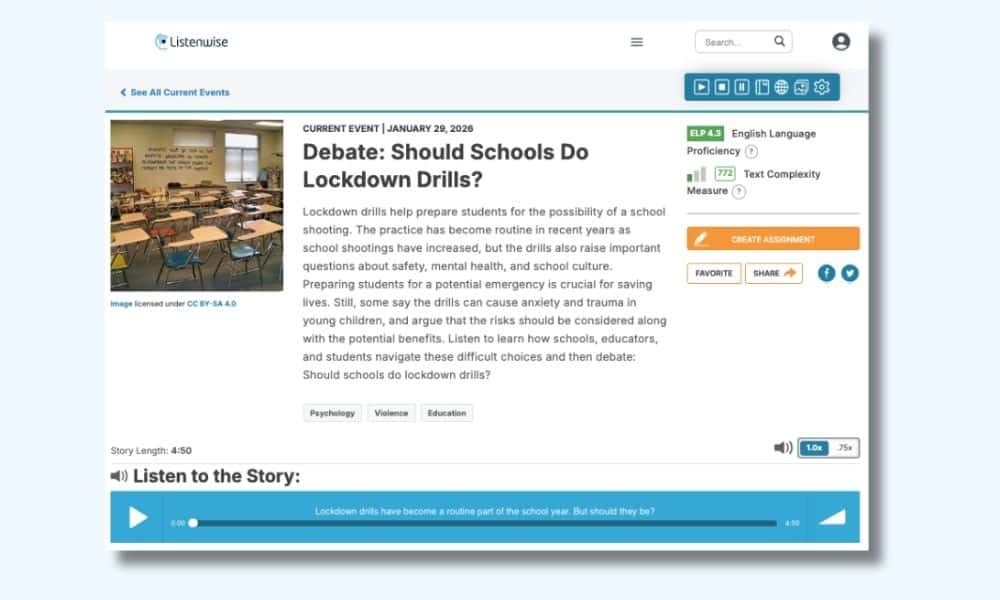
Right from the get-go, the students (and I, to be honest!) were hooked by the storytelling. I had a few who forgot to submit their work when they finished (because… middle schoolers), but by the second round, it went much more smoothly.
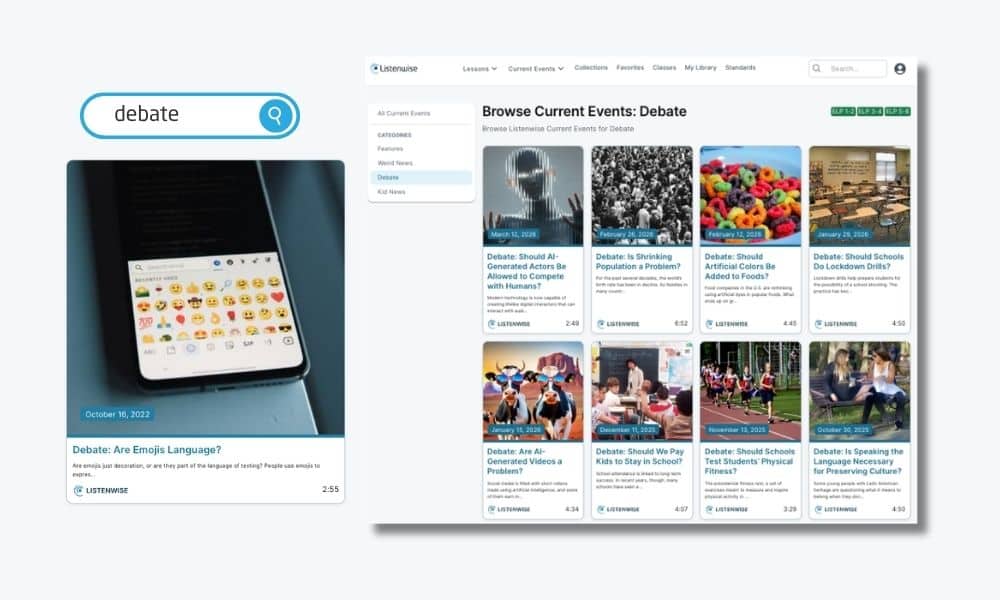
Here are some more middle schooler-approved, Listenwise debate lessons for you to try in your classroom:
Debate: Can Banning Social Media for Teens Work?
Debate: Should School Time Be Increased?
Debate: Should Caffeinated Drinks Be Regulated?
Why Listenwise is a Must-Have Literacy Tool
Middle schoolers check out quickly, which is why variety is key. Listenwise allows you to choose from:
- Current Events: Keeping the classroom relevant.
- Debate Topics: Perfect for ELA and social studies.
- Specific Subject Categories: Tailored to your curriculum.
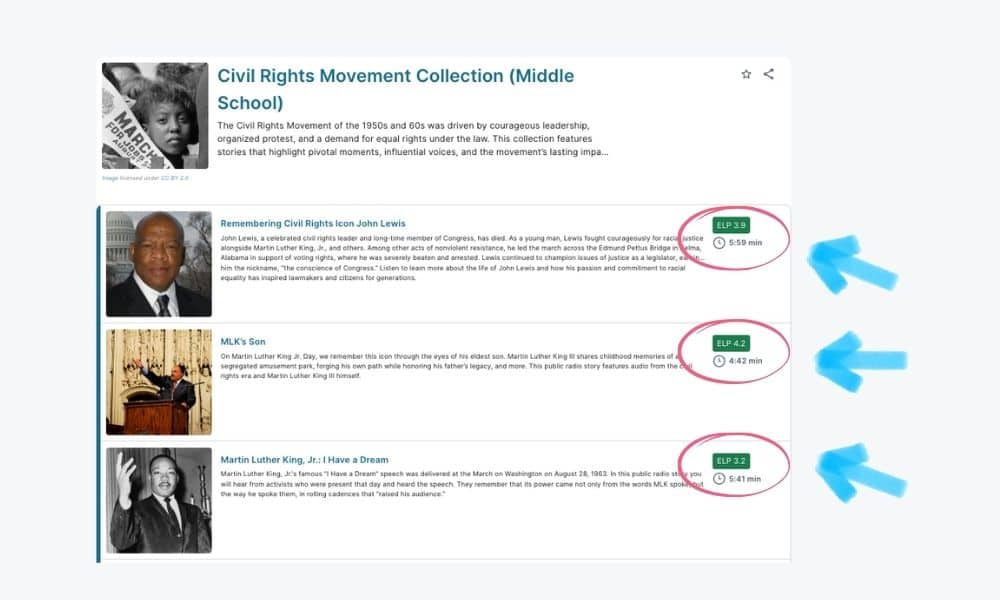
Furthermore, reading levels are clearly posted, allowing you to choose what’s best for your students. This makes it one of the most effective literacy tools for middle schoolers because it allows for easy differentiation.
After trying an initial lesson, I found that my students were able to use the platform very fluidly. My students quickly learned how to use the embedded tools. And the noise level while they worked? Crickets. They were all following along independently, which allowed me to roam and (let’s keep it real) get a bit of grading done.
The Power of Audio for Fluency
We love a tool that gives teachers a bit of breathing room. Listening to the podcast also lets my students hear what fluency sounds like.
As students follow along with the interactive transcript, they hear:
- Inflection: How tone changes meaning.
- Punctuation: Hearing the pauses and stops.
- Pace: Understanding the rhythm of English.
Supports for All Learners
I teach an ELA Support class designed for students with IEPs who struggle with reading and writing. For special education teachers, Listenwise is the “cherry on top.”
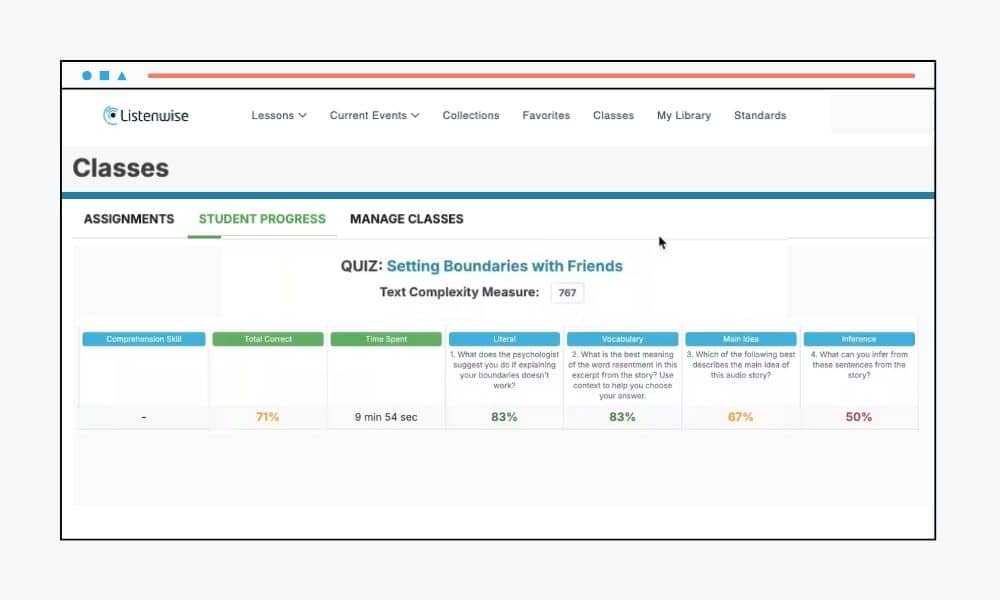
Embedded progress monitoring in your podcast lessons? Yes, please! It’s one less piece of data I need to collect later! Additionally, Listenwise has accommodations embedded in the program that allow students to take control of their own learning:
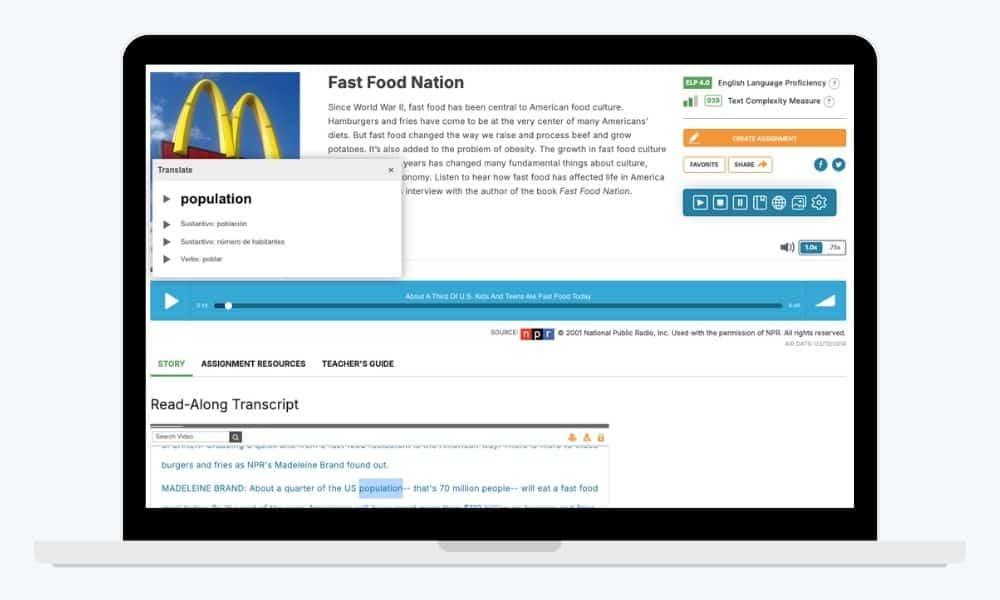
- Interactive Transcripts: Text is highlighted as it’s read aloud.
- Vocabulary Support: Instant definitions for unfamiliar words.
- Customizable Pace: Students can slow down the audio or play it back.
- Language Support: Visuals and native language translation.
Final Thoughts: Saving Your Sanity
If I had to pick my top three literacy tools for middle schoolers, Listenwise would be right at the top.
We all teach a “mixed bag” of learners—from multi-leveled readers to English language learners. We need tools that trim the fat off our planning time while targeting specific skills. The podcasts are the perfect length for limited attention spans, and the Google Classroom integration makes assigning work seamless.
To my fellow teachers: this is a must-try. Your students—and your sanity—will thank you.
