Last Updated on March 23, 2026
The following is a guest post written by author and elementary ELA Curriculum Coordinator, Dr. Shane Saeed. Dr. Saeed is the author of Be the Flame: Sparking Positive Classroom Communities, outlining high-yield, tangible strategies to cultivate strong, positive relationships. Dr. Saeed was named an ASCD Emerging Leader in 2022 and one of ISTE’s 20 to Watch in 2024. She enjoys collaborating with teachers around the world through her social media platforms.
The world of education has learned a lot about the science of reading. We’ve made great strides in systematic phonics and word recognition, but as Scarborough’s Reading Rope reminds us, decoding is only half the battle. To support skilled reading, we must look at the rope as a whole.
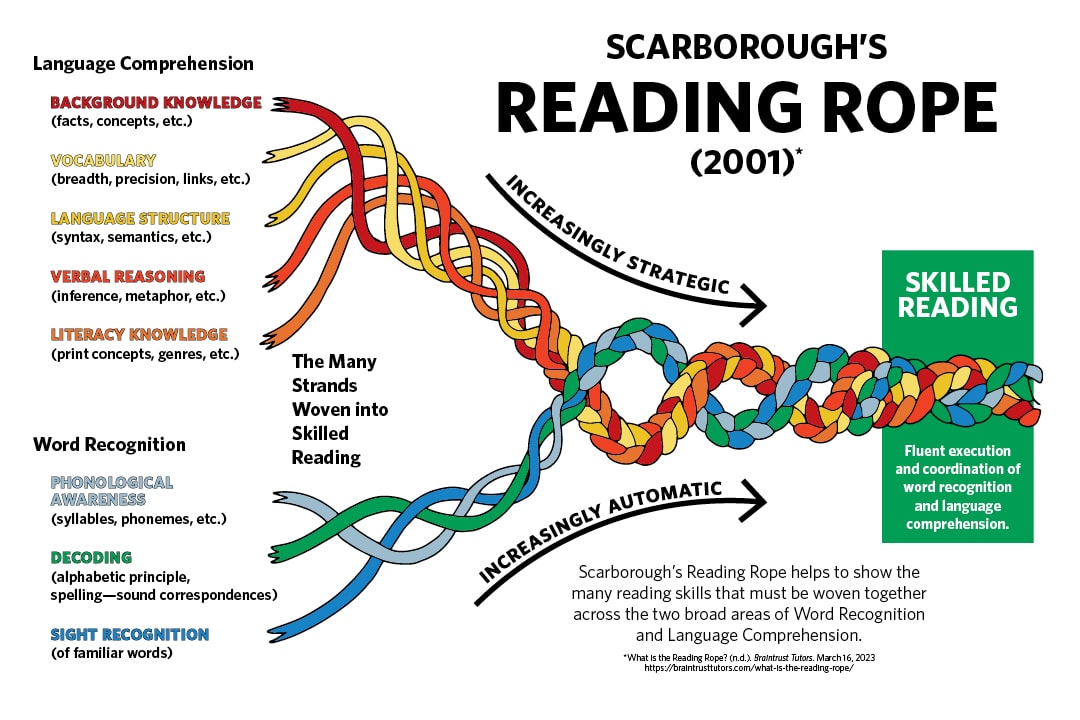
While decoding is foundational, we cannot neglect the language comprehension part of the strand, which encompasses vocabulary, language structure, and background knowledge. This part of the Reading Rope is focused on the outcome of comprehension, which is something we cannot “skill” our way into. To truly improve outcomes, we must look toward the broader science of learning.
Why Comprehension Skills Aren’t Enough
I once taught a fourth-grader named Anna* whose assessment scores suggested she struggled with comprehension. We spent the year in small groups identifying main ideas and text structures. Anna showed fantastic growth in class, but when the end-of-year assessment arrived, her scores decreased from her beginning-of-year scores.
I was shocked. When I asked Anna what happened, she simply said, “Ms. Saeed, I don’t know anything about chemistry.” The test passage was about chemistry. Because she lacked background knowledge on the subject, her “skills” (finding the main idea, etc.) were useless. She couldn’t anchor the new information to anything she already knew. This is a core tenet of the science of learning: background knowledge is the scaffolding upon which all new comprehension is built. Students need background knowledge on the topics to support their reading comprehension.
Background vs. Prior Knowledge
As educators, we want to provide the best instruction and environment for our students to learn. Part of this is being mindful of how we are building knowledge around the topics being read about in the classroom. The terms prior knowledge and background knowledge are used interchangeably when they are actually two different things.
- Background Knowledge: Stored, factual information about a specific content topic.
- Prior Knowledge: The intersection of background knowledge and lived experience.
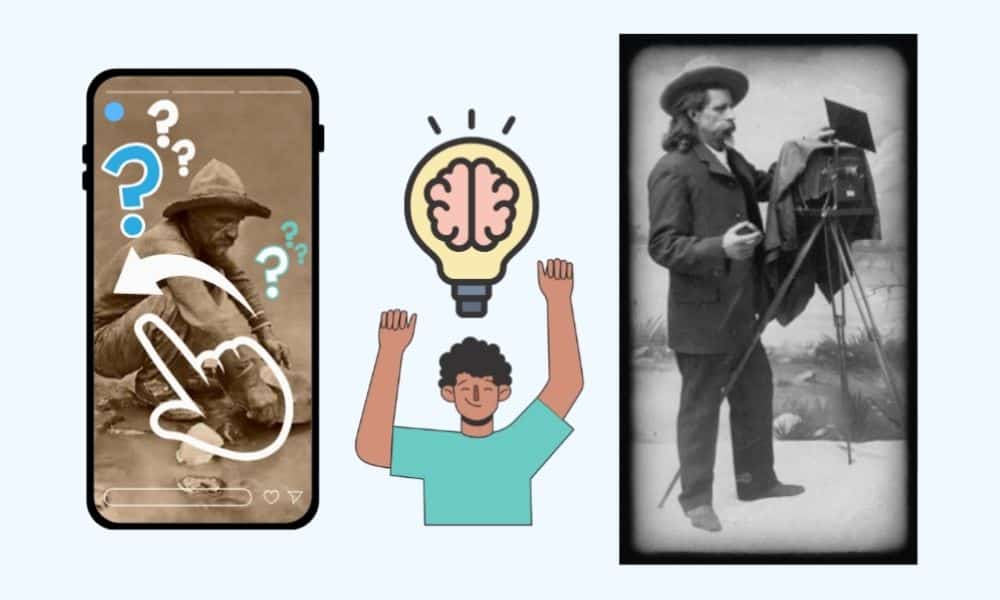
Because prior knowledge involves lived experience, it is susceptible to misconceptions. I once showed a primary source photograph from the Colorado Gold Rush to my students, and one asked, “When these people swiped through their pictures, were they all in black and white?”
I realized this student’s only experience with looking at photos was on an iPhone, and he was trying to fit his understanding of an iPhone photo gallery into how pictures were taken in the 1800s. So that day we learned about cameras and photographs in the 1800s!
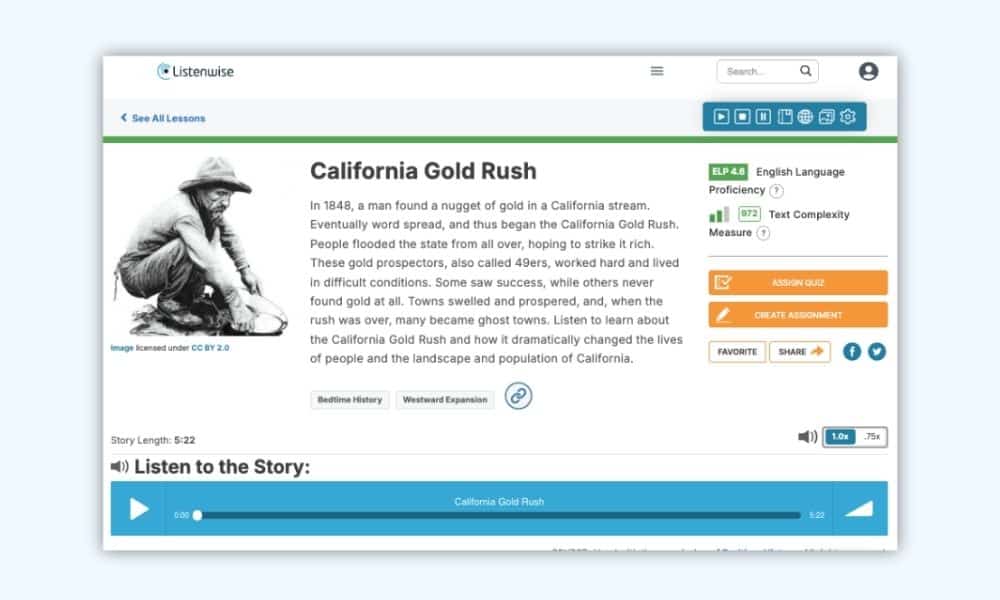
Building accurate background knowledge is essential work. This is where Listenwise becomes a powerful ally, providing podcasts that build a factual knowledge base to support your curriculum.
Applying the Science of Learning to Reduce Cognitive Load
Let’s look at a practical example. If I were starting the book George’s Secret Key to the Universe by Lucy and Stephen Hawking, a great book for upper elementary grades, I would first need to build knowledge about galaxies and black holes.
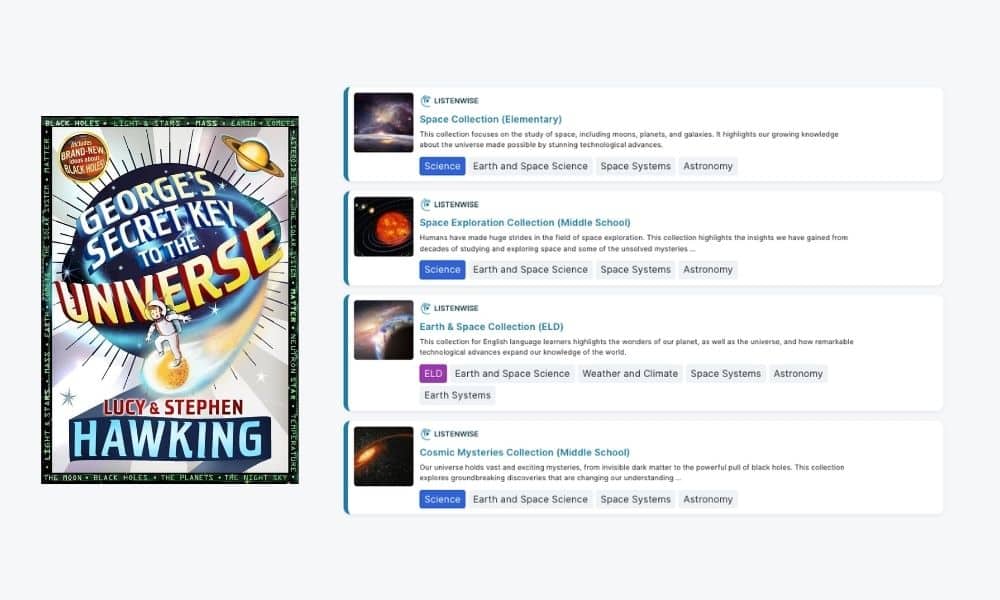
Instead of handing students a complex technical text (which might overwhelm them!) I could assign space and astronomy collections on Listenwise (available for Elementary, Middle School, High School, and ELD students. By using audio:
- We reduce cognitive load: Students can listen in order to learn content vocabulary such as singularity or nebula.
- We cultivate “Cognitive Space”: With the mechanical burden of reading removed, students can focus entirely on academic vocabulary and complex concepts.
3 Strategies Grounded in the Science of Learning
To make this new knowledge “stick,” here are three strategies you could use that leverage cognitive science. As an example, let’s use learning content about Harriet Tubman and the Underground Railroad:
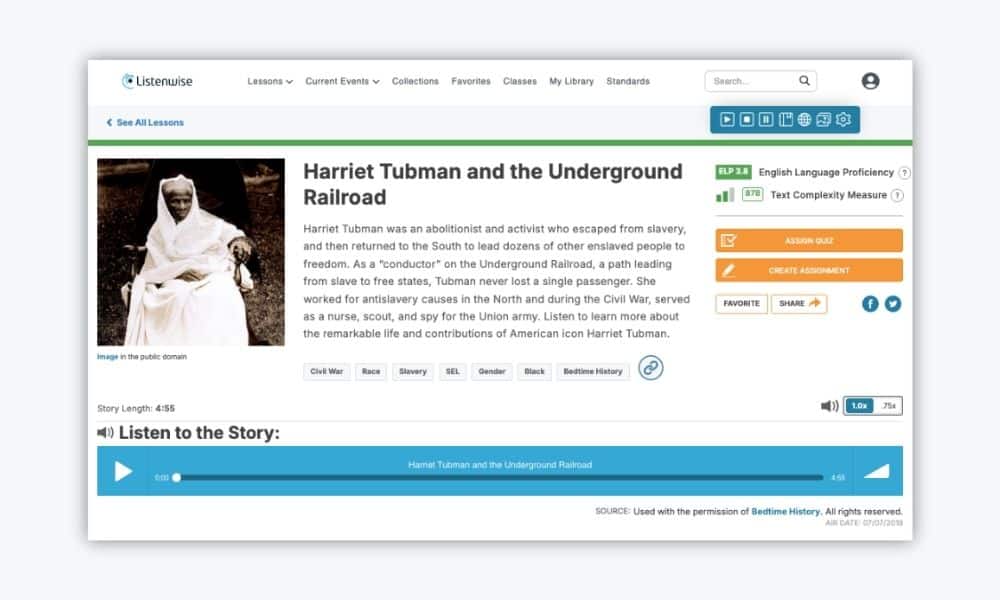
The Brain Dump and Collaboration
After listening to the podcast, have students draw or write everything they remember about Harriet Tubman and the Underground Railroad. This is retrieval practice, which strengthens memory pathways. If a brain dump is too much for a student, try restricting it by having them retrieve just two things from what they listened to. Use the Listening Comprehension Questions included in the Listenwise lesson to help students add to their brain dumps. This helps integrate new information into existing mental models.
Concept Mapping
After listening, students could create a concept map that visually connects ideas from the podcast. Bonus if they can continue to add to their concept maps as they listen to more podcasts on the topic!
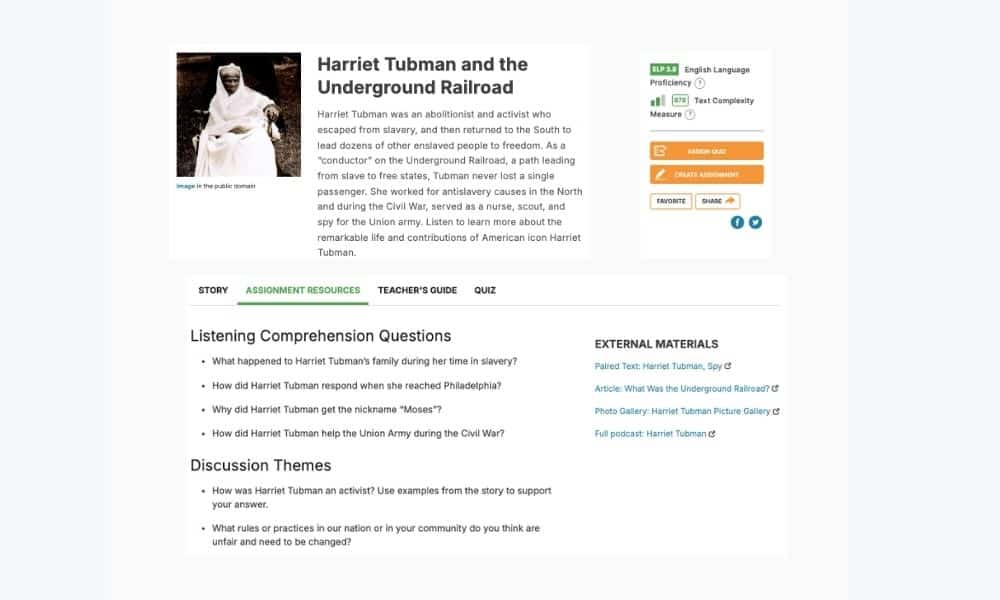
Elaborative Interrogation
Have students generate “Why?” or “How?” questions about the audio using the Listenwise Discussion Themes. This forces them to process the material at a deeper level.
Learn more about how to take this same approach and tailor it for English language learners, which includes examples using this same lesson on the Underground Railroad.
Building knowledge might feel like one more thing a teacher is adding to their plate. However, by integrating audio-based knowledge building, you are strategically lowering the barrier to entry for complex ideas. This approach honors the science of learning by allowing students to build the mental maps they need before they ever turn the first page.
When we use listening to bridge the gap between decoding and deep comprehension, we ensure that no student is left staring at a page they can’t understand simply because they haven’t been introduced to the topic. Let’s ease the instructional burden and give every student the “brain space” to become a confident, knowledgeable reader!
